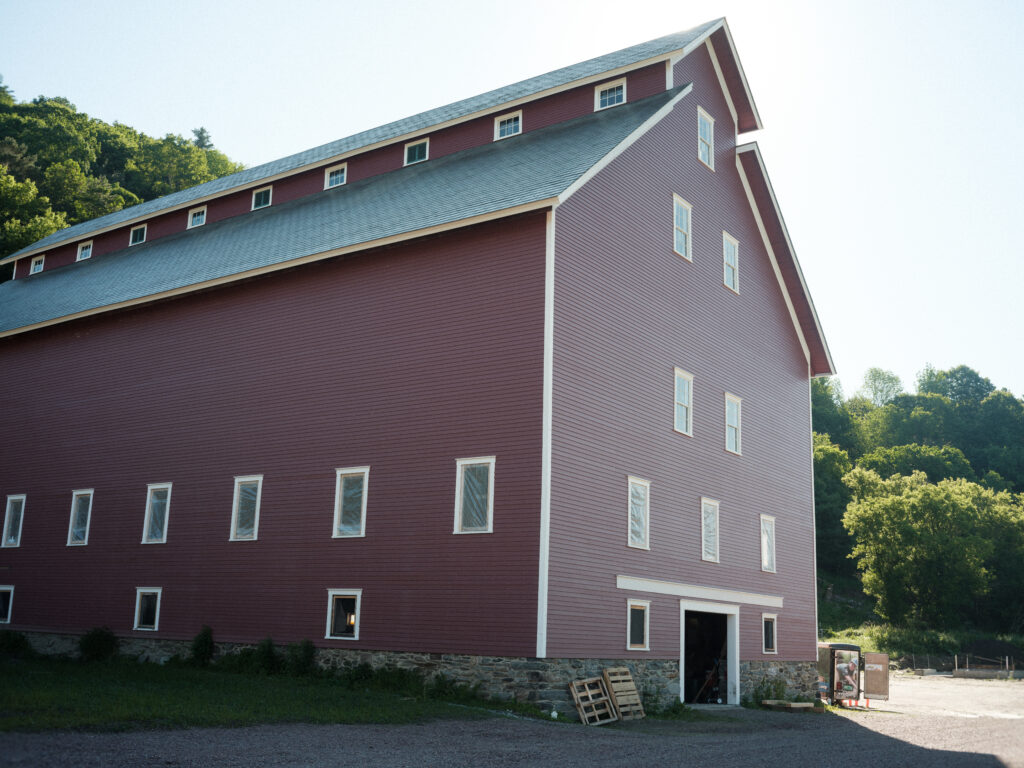
It’s midsummer at VYCC, and our Richmond campus looks and feels quite different than it did a year ago. The East Monitor Barn now stands fresh and tall with its exterior restoration complete. The site work and infrastructure that will bring the barn and surrounding buildings online is nearly finished, and new construction that supports VYCC’s housing and accommodations is already underway on the hillside above the barn.
The Barn’s Exterior: Visitors and passers-by on Route 2 can now see the East Monitor Barn looks like a working barn again for the first time in years. New clapboard siding now covers all sides of the building, capping a restoration process that began in 2023 when the barn was lifted off its deteriorating foundation, straightened, and lowered onto a new one. In the time since, the restoration team has repaired and replaced structural framing, fully re-slated the roof with a combination of salvaged original slate and new slate to match, and restored the clapboard siding that gives the barn its character.
Building the Systems Underneath: Less visible but equally important is the infrastructure work that will bring the barn and its surrounding buildings online, which is near completion and wrapping up this summer. Since last winter, contractors have been installing fire suppression lines, septic systems, underground grease traps, drainage ponds, and electrical service across campus. These are the systems that will allow the barn and the new buildings around it to function year-round as training, production, and housing spaces (described further below).

What’s Next for the East Monitor Barn: With the exterior restoration complete and campus infrastructure nearing the finish line, the focus now turns to the barn’s interior. In the next phase, the stock level will become a four-season workshop and training center where VYCC crews and partner organizations can build the technical and leadership skills they need for careers in the trades and conservation. The ground floor will become a post-harvest food processing, production, and storage space, expanding VYCC’s capacity and extending our seasonal capabilities to serve vulnerable Vermonters with organic ingredients from our farm. The barn will also include restroom amenities serving the building itself and the new hillside cabins being assembled for installation just uphill – six three-season timber-frame structures that will house crew members during training and time off. An outdoor pavilion nearby will give crews a place to cook and eat meals together. When complete, the restored barn, the cabins, and the pavilion will transform VYCC’s ability to house, feed, and train corps members and visiting groups on campus year-round.

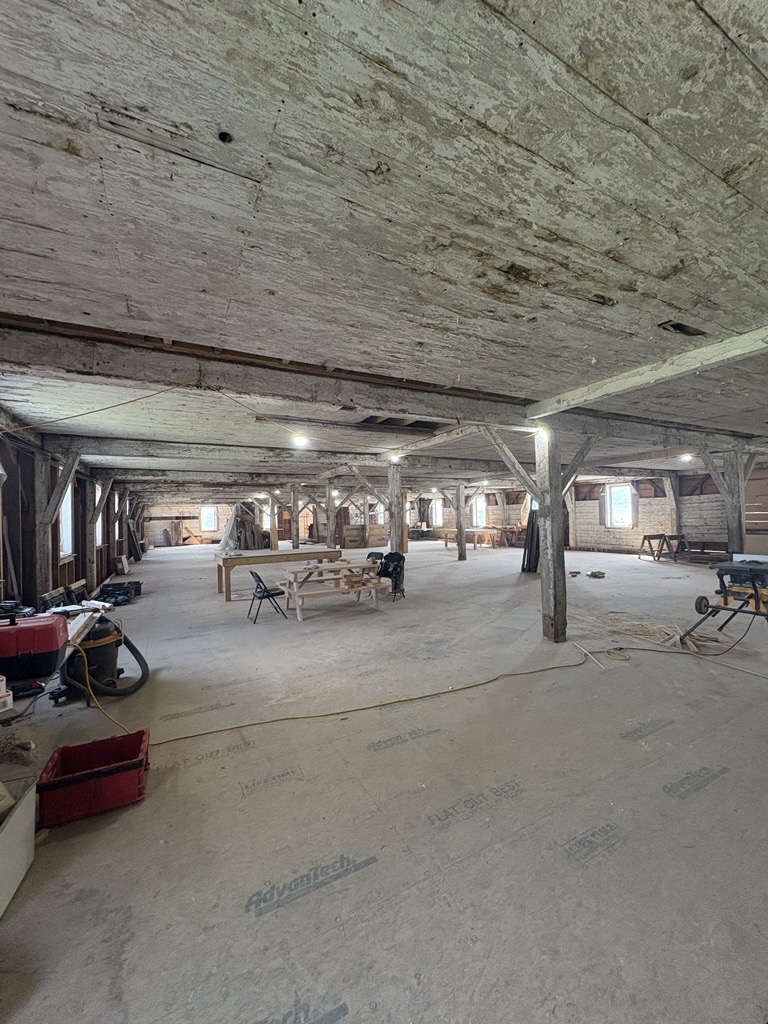


Join Us: The exterior restoration is complete and the campus infrastructure is coming together, but there is still significant work ahead to finish the barn’s interior. Fitting up the stock level as a training center and the ground floor as a post-harvest food production space will take continued investment from people who believe in VYCC’s mission and the role this barn will play in the future of the organization.
This July, VYCC launched the community phase of fundraising for the Stronger Through Service campaign with a Barn-Raiser celebration that brought together longtime supporters and people discovering VYCC for the first time. The evening raised $54,600 through ticket sales, live and silent auctions, and generous donations, carrying us that much closer to completing the East Monitor Barn.
That energy is carrying forward. The community phase is about inviting a broader audience into this work; people who care about Vermont’s young people, its working landscape, and the future of conservation and the trades. There are many ways to be part of what’s happening at VYCC! Come volunteer on the farm and see our campus first-hand, follow along online as the project progresses, spread the word to someone who might connect with this mission, or consider making a gift to the campaign at eastmonitorbarn.org/donate.
Learn more about VYCC’s Conservation Program and Food & Farm programs.